
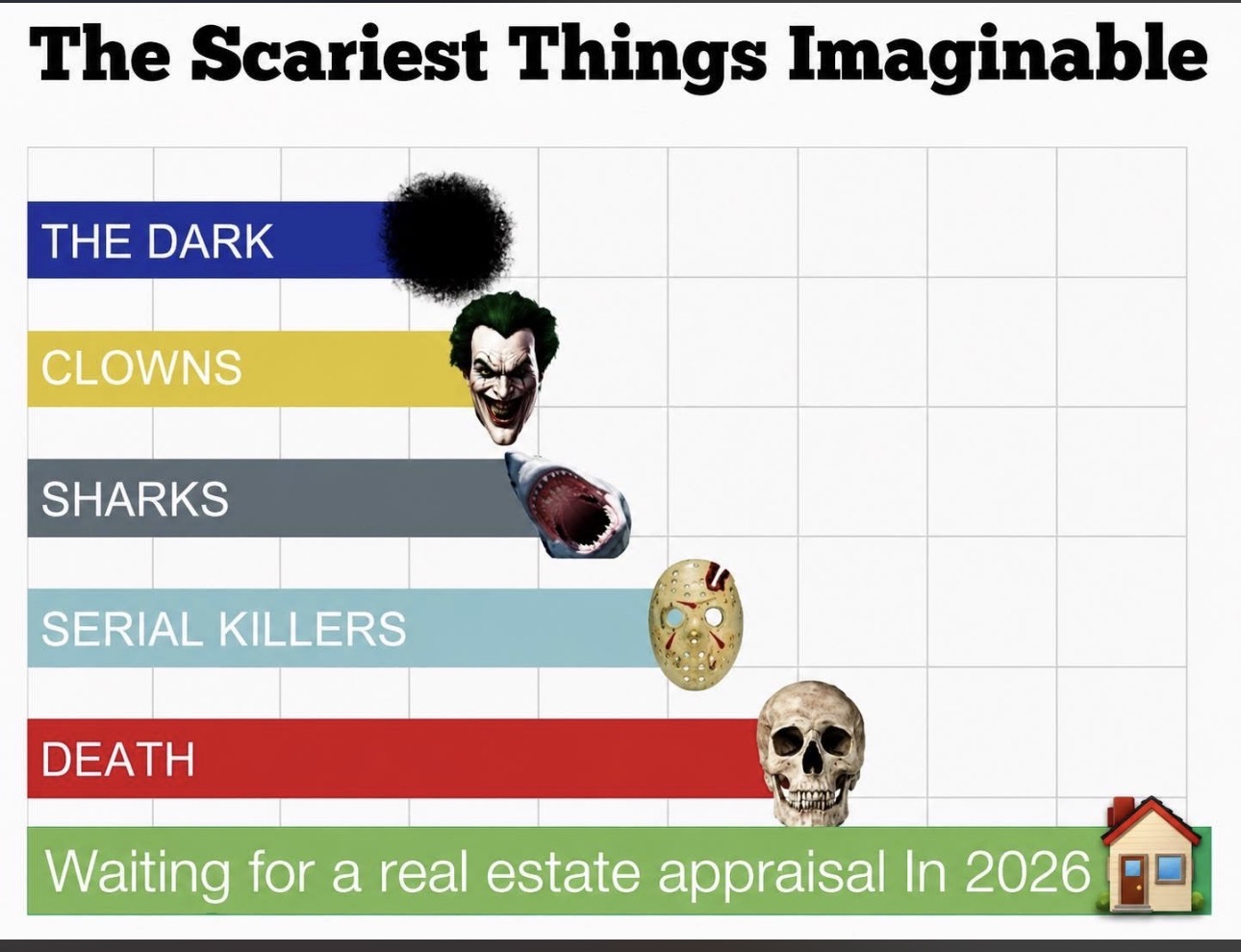
What happens if the appraisal comes in low on a Twin Cities home?
When a lender’s appraisal comes in below your agreed price, the lender will only finance the appraised value — not the contract price. That gap is yours to solve. In the Twin Cities you generally have five options: the buyer covers the difference in cash, the parties renegotiate or split the price, the seller drops to the appraised value, you dispute the appraisal with stronger comps, or the buyer uses the appraisal contingency to walk with earnest money intact. Which path makes sense depends on your contract, your timeline, and how strong the comparable sales really are.
By Hammer Group | June 23, 2026
You accepted an offer, everyone shook hands, and then the appraisal landed $30,000 under the contract price. The deal didn’t die — but it just changed, and now there’s a clock running. This is one of the most stressful moments in a transaction, and it’s a question buyers and sellers across the western suburbs are asking constantly right now.
Here’s the calm version of what’s actually happening, and exactly what you can do about it.
Why low appraisals are showing up again in the west metro
An appraisal is the lender’s independent opinion of value. The bank isn’t lending on what you agreed to pay — it’s lending on what an appraiser says the home is worth, using recent comparable sales. When those two numbers don’t match, you have what’s called an appraisal gap.
Two things make this more common in our market. First, mortgage rates climbed back to the mid-6% range this spring, which compresses how much buyers can stretch. Second, the homes I work with most — move-up and luxury properties in the $750K to $2M-plus band around Lake Minnetonka, Wayzata, Edina, and Orono — are each genuinely unique. A custom lakefront home or a heavily updated estate doesn’t have five clean comps down the street the way a 1,900-square-foot rambler does. The fewer true comparables, the more room there is for the appraised number to land short.
That context matters, because a low appraisal in this market almost never means the home is worthless. It usually means the contract price ran a little ahead of what closed sales can prove — which is a solvable problem, not a dead deal.
Your five options when the number comes in low
When the appraisal comes in under contract, here’s the full menu. Most deals get saved with one of the first three.
- The buyer covers the gap in cash. The loan is based on the appraised value, so the buyer brings the difference to closing on top of their down payment. On a $40,000 gap, that’s $40,000 in additional cash. This is the cleanest fix when the buyer has reserves and still believes in the home.
- The seller lowers the price to the appraised value. Simple, and sometimes the right call — especially if the home has been sitting or the comps genuinely support the lower number. The seller nets less, but the deal closes on the original timeline.
- The two sides meet in the middle. The most common outcome I see. Seller drops part of the gap, buyer brings part of it in cash, and the deal holds. A $36,000 gap becomes $18,000 from each side, and everyone moves on.
- Dispute the appraisal with a reconsideration of value. If the appraiser used weak or stale comparables, missed a finished lower level, or got the square footage wrong, the buyer’s lender can submit a formal reconsideration with better data. This works when you have hard evidence — not just a feeling the number is wrong.
- The buyer walks using the appraisal contingency. If the gap can’t be bridged and the buyer has an appraisal contingency, they can cancel and recover their earnest money. The seller relists — and faces the reality that the next buyer’s lender will likely order an appraisal that lands in the same range.
That last point is the one sellers underestimate. Walking away from a renegotiation doesn’t reset the home’s value — it just resets the calendar. If you’re weighing whether to hold firm or adjust, it’s worth understanding what the current pending-sale data says about homes priced ahead of the comps.
How the appraisal contingency actually protects you
The appraisal contingency is the single most important line item here. It’s language in the purchase agreement that says the buyer can cancel — and keep their earnest money — if the home appraises below the contract price.
If you’re a buyer with that contingency intact, you have leverage. You can ask the seller to lower the price, and a “no” doesn’t trap you; it lets you walk cleanly. If you waived the appraisal contingency to win a competitive offer — which plenty of buyers did over the last few years — you don’t have that exit. You either find the cash or risk your earnest money. This is exactly the kind of trade-off I walk buyers through before they write an aggressive offer, because the consequences show up weeks later at exactly the wrong moment.
Sellers should read the contingency just as closely. If the buyer kept it, a hard “no” on price may simply hand them a clean cancellation. Knowing what the contract actually allows is what turns a panicked phone call into a strategy conversation.
What I tell clients before it ever gets to this point
The best way to handle a low appraisal is to make it unlikely in the first place. For sellers, that means pricing against what has actually closed and recorded — not against the highest-priced active listing in the neighborhood and not against a Zestimate. An appraiser is going to use sold comps, so your list price should respect the same evidence. Getting this right is part of preparing a home to sell the right way, and it’s the single biggest lever sellers control.
For buyers, it means knowing your true cash position before you waive anything. An appraisal gap is a cash problem, and cash problems are much easier to solve when you’ve planned for them than when they surprise you three weeks before closing.
And for either side, it means modeling the real numbers. A $25,000 price change moves your bottom line in ways that ripple through your loan, your closing statement, and — for sellers — your net proceeds after commissions and Minnesota closing costs. The decision is rarely as simple as “split it” once you see the full picture.
Frequently Asked Questions
Who pays the difference if the appraisal comes in low in Minnesota?
Nobody is automatically required to. The lender caps the loan at the appraised value, and the buyer and seller negotiate who closes the gap — the buyer adds cash, the seller lowers the price, the parties split it, or the deal is renegotiated. If they can’t agree and the buyer has an appraisal contingency, the buyer can cancel and recover earnest money.
Can a seller refuse to lower the price after a low appraisal?
Yes. A seller is not obligated to drop to the appraised value. But if the buyer is financing and won’t or can’t cover the gap, the seller’s practical choice is often to renegotiate or relist — and the next buyer’s lender will likely order an appraisal that lands in the same range.
How often do appraisals come in low in the Twin Cities right now?
Low appraisals are most common when a home sells well above the most recent comparable sales — which happens most in the move-up and luxury bands where each property is more unique. With homes closing around 98–99% of list price per Minneapolis Area Realtors data, a low appraisal usually signals the contract price ran ahead of the comps, not that the home lacks value.
Can you dispute a low appraisal?
Yes, through a reconsideration of value. The buyer’s lender submits stronger or more recent comparable sales, corrected square footage, or missed upgrades for the appraiser to review. Successful disputes are built on hard data, so the quality of the comps you supply matters more than anything else.
Does an appraisal contingency protect the buyer’s earnest money?
If the purchase agreement includes an appraisal contingency and the appraisal comes in below the contract price, the buyer can typically cancel and recover earnest money, as long as they act within the contract’s deadlines. Buyers who waived the contingency to win a competitive offer do not have that protection.
The bottom line
A low appraisal is a negotiation, not a verdict. The number on the report is the lender’s opinion of value — what you do next depends on your contract, your cash, your timeline, and how strong the comparable sales really are. Almost every gap I’ve seen in the west metro gets bridged once both sides understand their actual options instead of reacting to the shock.
If you’re staring at a low appraisal right now — or you want to price your home so this never happens — I’m happy to run the real numbers with you. A free, no-pressure home valuation from the Hammer Group team shows you exactly where your home stands against the comps an appraiser will actually use, before it costs you a deal.
This article is informational and not legal or tax advice. For guidance on your specific contract or situation, consult your real estate agent, attorney, or tax professional.
About Hammer Group
Hammer Group is a Twin Cities real estate team with Compass, helping buyers and sellers navigate the Minneapolis–St. Paul market with a calm, data-driven approach. The team focuses on luxury and move-up homes across the western suburbs.