

Do you need flood insurance to buy a home on Lake Minnetonka?
If your lender’s flood determination puts the home in a Special Flood Hazard Area (an “A” or “AE” FEMA zone), federal law requires flood insurance before your loan can close — it’s not optional and it’s not up to your lender’s discretion. Flood insurance Lake Minnetonka buyers need runs roughly $400 to $2,000 a year for most shoreline parcels, more in higher-risk zones, and it can be bound at closing with no waiting period. If the zone call looks wrong for your lot, you can appeal it before you write a check.
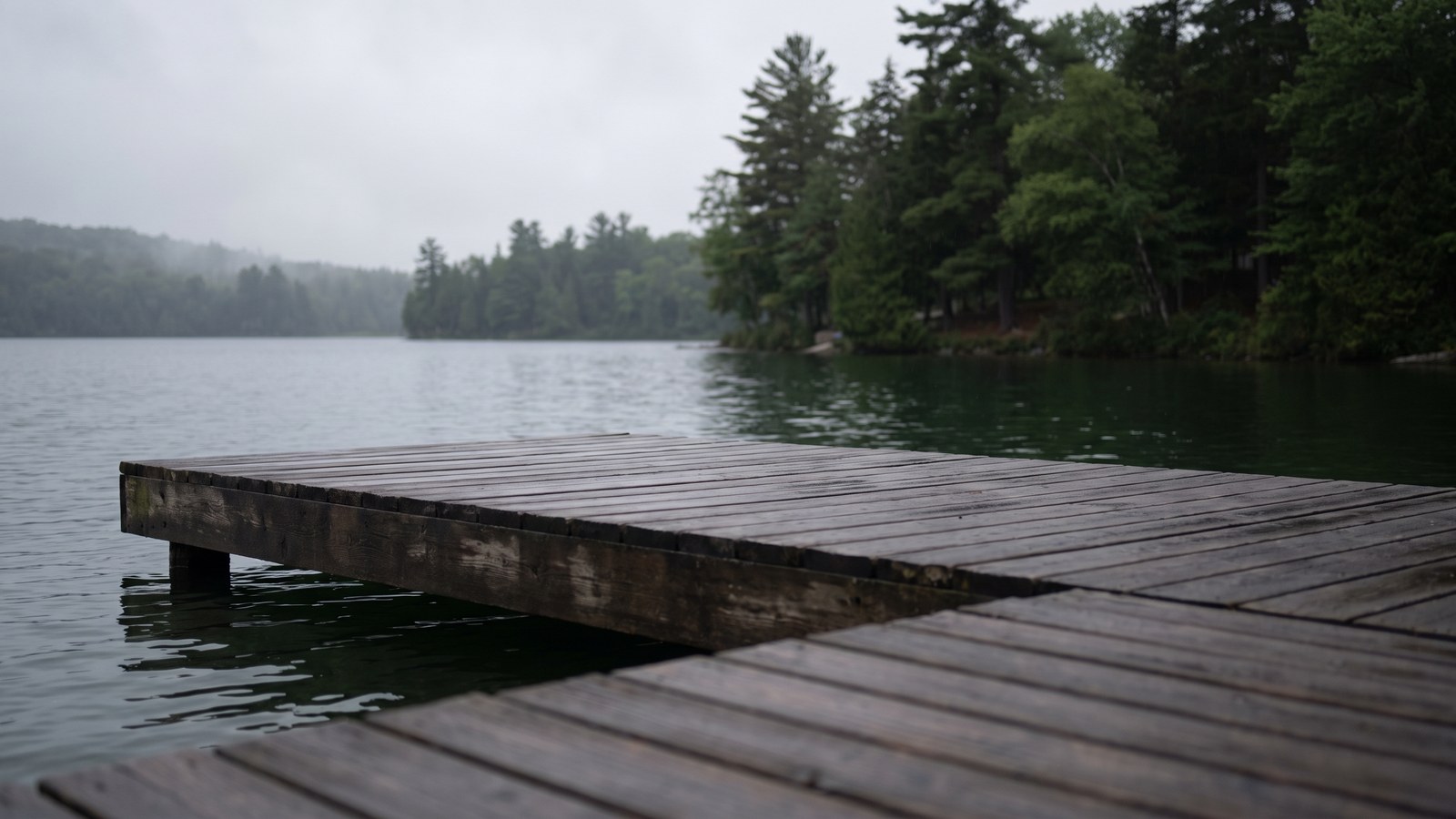
Most buyers shopping Lake Minnetonka are thinking about docks, setbacks, and whether the lot can support the boathouse they want. Flood insurance rarely makes the list until it shows up in week three of underwriting, attached to a letter with a deadline on it.
Here’s what actually happens, and how to get ahead of it before you’re under contract.
Why Lake Minnetonka flood zones catch buyers off guard
In late June 2025, heavy rain pushed Lake Minnetonka more than five inches above its Ordinary High Water Level in about 48 hours, settling near 929.78 feet. Docks and boat launches went underwater. Beaches closed. Marina operators cut power to docks where the electrical lines were suddenly submerged, and the Minnehaha Creek Watershed District (MCWD) issued no-wake restrictions to keep rising water from tearing apart what was left of the shoreline infrastructure. It wasn’t the first high-water event on the lake — 2024 brought a similar declaration — but it was a real reminder that the FEMA flood maps covering Lake Minnetonka aren’t a bureaucratic formality.
That matters because most buyers assume flood risk is a coastal problem or a river-town problem. On Lake Minnetonka, it’s a shoreline-elevation problem, and it gets decided well before closing by two things you don’t control: where FEMA drew the line, and how far above the lake your specific lot actually sits. Checking the flood-zone status of a specific parcel before you write an offer is a five-minute lookup — waiting until your lender orders it mid-underwriting is what turns flood insurance Lake Minnetonka buyers need into a closing-timeline problem instead of a budgeting line item.
What flood insurance Lake Minnetonka lenders actually require
Every FEMA flood map uses zone letters. “A” and “AE” zones are Special Flood Hazard Areas (SFHAs) — “AE” zones have a published Base Flood Elevation, “A” zones don’t, which usually means a surveyor or engineer has to establish it. If any structure on the parcel sits inside an SFHA and your loan comes from a federally regulated or federally insured lender, the lender is legally required to make you carry flood insurance. This isn’t a lender preference — it’s federal law, and it applies the same way whether you’re buying a $700,000 rambler near the shoreline or a $4 million estate on Orono’s deep water.
Here’s the part that catches buyers off guard: the determination usually doesn’t surface until underwriting is already underway. Your lender orders a Standard Flood Hazard Determination (a $15–25 form) early in the process, but the insurance requirement doesn’t become real to most buyers until a letter arrives saying coverage has to be in place before the loan funds. If you already own the home and let a policy lapse, lenders typically give you 45 days to fix it before they force-place a policy of their own choosing — usually far more expensive and far less useful than one you shop yourself.
The one piece of good news: for a new purchase, the National Flood Insurance Program’s standard 30-day waiting period is waived. You can bind a policy and have it take effect right at closing, which is not true if you try to buy flood coverage outside of a purchase transaction.
Cost-wise, expect a range rather than one number:
- Lower-risk zones: roughly $400–$800 a year
- Moderate-risk zones: roughly $800–$2,000 a year
- Higher-risk zones: $2,000–$6,000+ a year, depending on the structure’s elevation relative to the Base Flood Elevation
Private flood insurance is also worth a quote alongside the NFIP policy — on some Lake Minnetonka parcels it comes in cheaper, and on others it offers broader coverage than the federal program. Either way, shop both before you’re staring down a closing date, since binding flood insurance Lake Minnetonka lenders will accept is one more step your title company needs in hand before funding.
If the flood zone looks wrong: the LOMA appeal
A FEMA flood zone designation is a map call, not a physical fact about your specific lot — and maps lag reality more often than people expect. If your lender flags a property as being in an SFHA and you believe the actual structure sits above the flood elevation, you can request a Letter of Map Amendment (LOMA) to have the property formally removed from the zone.
There’s no FEMA filing fee for a LOMA, but you’ll need an Elevation Certificate from a licensed surveyor to prove the structure sits at least a foot above the Base Flood Elevation. Elevation Certificates typically run $500–$2,700, and an optional filing service adds another $300–$600. Timeline-wise, a straightforward case can move through an electronic LOMA (eLOMA) in as little as a day to a few weeks; a standard LOMA review through FEMA runs closer to 60 days, putting the total process at two to four months end to end.
A successful LOMA removes the mandatory insurance requirement. It doesn’t mean the lake can’t rise again — the June 2025 event is proof enough of that — so plenty of owners keep a policy voluntarily even after a LOMA clears.
If you’re buying anywhere near the shoreline, it’s worth asking about elevation and flood-zone status before you write the offer, not after your lender flags it. The Minnehaha Creek Watershed District’s floodplain alteration rule, which governs the Lake Minnetonka watershed, also requires new or altered residential structures to have door and window openings at least two feet above the 100-year high-water elevation — a separate but related number worth having your buyer’s due-diligence checklist account for alongside the LMCD dock rules and DNR shoreland setbacks you’re already tracking.
Bring up flood insurance Lake Minnetonka requirements with your lender and your agent at the same time you’re asking about docks and setbacks — not three weeks into underwriting, when a LOMA’s two-to-four-month timeline no longer fits your closing date.
This is the same shape as the insurance crunch we’ve written about on the roof-age side of the market — a third party’s underwriting rules, not the home’s condition, decide whether the deal closes on schedule. It shows up differently depending on the peril, but the fix is the same: find out early, while you still have room to negotiate, shop coverage, or request a LOMA, instead of finding out eight days before your scheduled closing.
For buyers already working with a jumbo loan on a Lake Minnetonka purchase, add this to the list of underwriting items your lender will want resolved before the appraisal and the flood determination both clear — on a $2M+ purchase, a flood-insurance surprise can stall a closing date that was already tight.
Frequently Asked Questions
Is Lake Minnetonka in a flood zone?
Parts of it are. FEMA’s flood maps for the Lake Minnetonka watershed designate certain low-lying shoreline parcels as Special Flood Hazard Areas (zones starting with A or AE), while others nearby fall outside the mapped zone entirely. There’s no single answer for “the lake” — it depends on your specific lot’s elevation relative to the lake’s Base Flood Elevation, which is why a flood determination happens parcel by parcel.
How much does flood insurance cost on Lake Minnetonka?
Most Lake Minnetonka buyers in a mapped flood zone can expect somewhere between $400 and $2,000 a year, with higher-risk parcels running $2,000–$6,000 or more depending on elevation. Get a quote during your inspection period, not after you’re under contract with a tight closing timeline.
Can I remove my property from a FEMA flood zone?
Yes, if the actual elevation supports it. A Letter of Map Amendment (LOMA), backed by a surveyor’s Elevation Certificate showing the structure sits above the Base Flood Elevation, can formally remove the mandatory insurance requirement. The process typically takes two to four months and the Elevation Certificate runs $500–$2,700.
What happens if I don’t get flood insurance when it’s required?
If your home is in an SFHA and your loan is federally backed, your lender is required to make sure you carry flood insurance — you can’t opt out. If a policy lapses after closing, lenders typically give you 45 days to fix it before force-placing a policy of their own choosing, which usually costs more and covers less than one you’d shop yourself.
Does the 2025 high water on Lake Minnetonka mean the flood maps are changing?
Not necessarily. The June 2025 high-water event, which pushed the lake more than five inches above its Ordinary High Water Level, was a real stress test of existing conditions rather than confirmation of a map revision. Always check the current effective FEMA map for your specific parcel rather than assuming last year’s water levels have been built into a new one.
Every Lake Minnetonka parcel is different, and the only way to know your actual exposure — flood zone, elevation, insurance cost, and whether a LOMA makes sense — is to run it down before you’re locked into a purchase agreement. If you’re shopping the lake and want a read on a specific property before you write an offer, reach out and we’ll walk through it together.
About Hammer Group
Hammer Group is a Twin Cities real estate team with Compass, helping buyers and sellers navigate the Minneapolis–St. Paul market with a calm, data-driven approach. The team focuses on luxury and move-up homes across the western suburbs.